
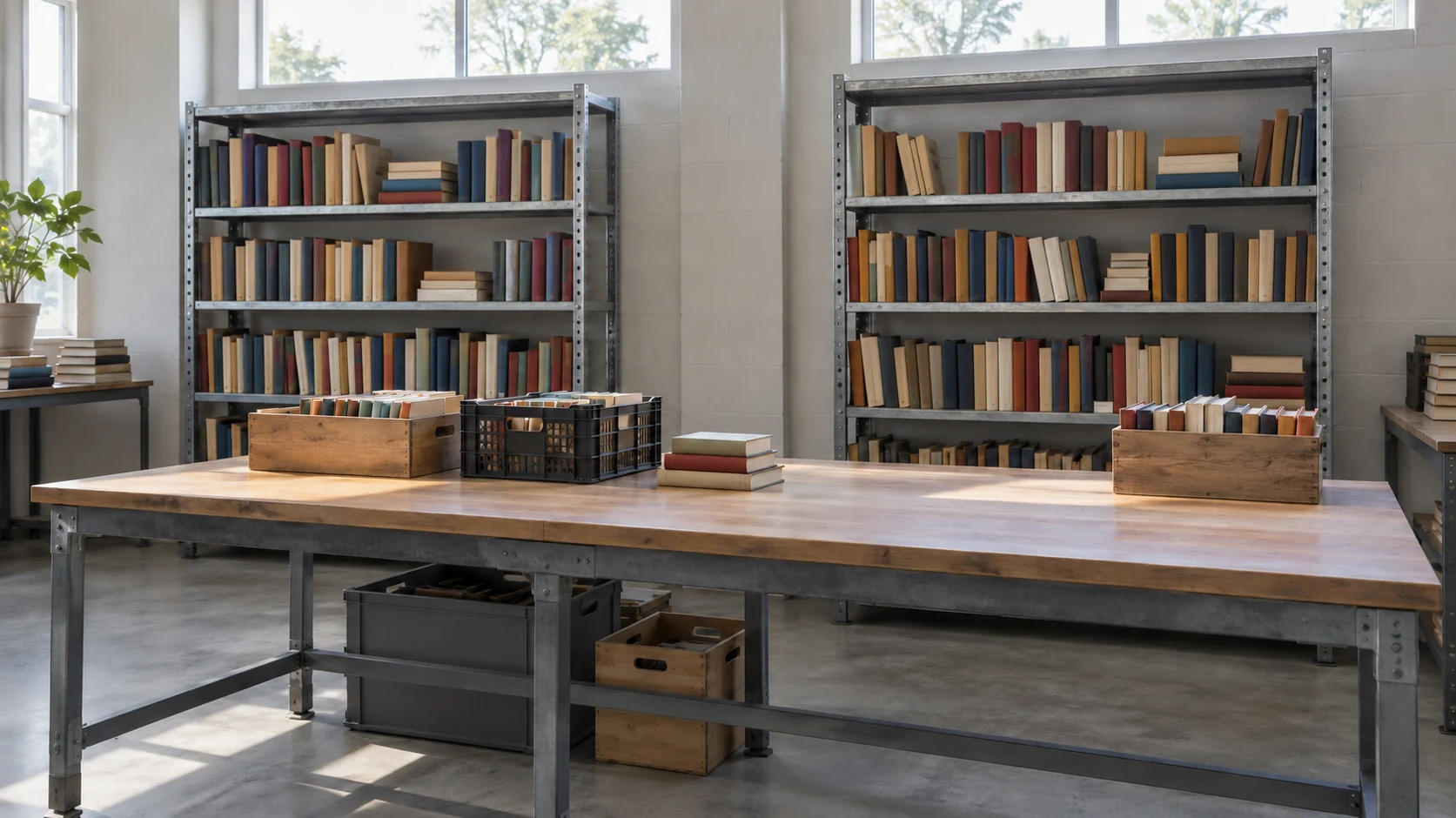
After a book donation, the first useful step is assessment. Collected books need identification and a condition check before their next route is chosen. Some can continue through resale or donation. Books unsuitable for reuse go through responsible paper recycling. The word “donation” describes your handoff, not a guarantee that every book goes straight to a classroom.
Knowing the process helps you prepare a better batch and ask useful questions. It also explains why the condition of the books and the details in a pickup request matter.
From your home or organization to the warehouse
Sustainable Books receives books through pickups and staffed warehouse drop-offs. Collections include household books, organizational material, and library discards or sale leftovers. Pickup availability depends on location and routes. The warehouse team then receives the books for assessment.
Keep the batch dry and securely packed for the agreed handoff. Put any special instructions in the request, not only on a note inside the last box. If the number of boxes changes substantially, tell the team before the trip. Vehicle space and loading arrangements depend on what is ready.
For a home collection in our service regions, send a pickup request with your book and address details. For an institution or unusual batch, use the contact page to discuss the arrangement. A submitted request is followed by confirmation of availability and practical details.
Receiving and identifying the books
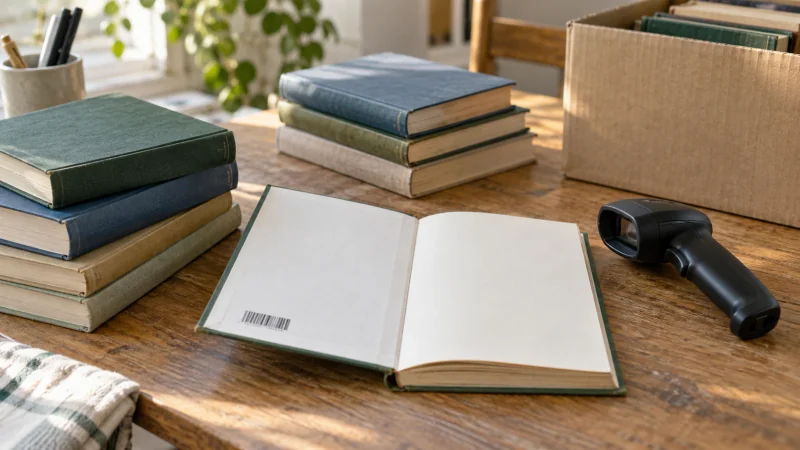
Our intake process records where books came from and associates them with an arrival lot. Staff identify books using the ISBN where available. If a barcode cannot be scanned, the number printed inside can help identify the edition.
This edition check matters because similar-looking books can differ. A paperback and a hardcover can be separate editions. A textbook's edition can change its contents. The title on the front alone is not always enough to identify a copy accurately.
Not every donated book has a scannable barcode, and the existence of a barcode does not guarantee selection for sale. Identification is one part of the process. Condition and suitability still need attention.
A closer look at the copy
Staff grade the book's condition. Pages, covers, and bindings help determine whether a copy belongs in sale inventory or needs another route. A clean appearance on the front cannot compensate for missing pages inside. Likewise, an ordinary crease does not make every readable book unusable.
You can help by keeping damaged material separate and describing it clearly. Do not hide a wet or mouldy copy in the middle of a clean batch. If you are uncertain about acceptance, ask before the handoff. That gives the team a chance to advise on the material you actually have.
Different books can have different next chapters
Resale: books selected for online sale move into inventory. Staff later pick and pack sold copies for their next readers. You can browse our used-book shop when you want to continue the reuse cycle yourself.
Donation: suitable books can support reading and learning through feasible donation requests. Our current donation focus is local. Matching useful material with an actual need matters more than sending an unsorted box to an organization that cannot use it.
Responsible recycling: books unsuitable for reuse are directed to our paper-recycling route. This is a separate material outcome. It does not mean that every book becomes a new book or a particular paper product.
Our illustrated book-journey page shows the overall process. It describes possible routes without promising a particular result for each donated title.
Ask precise questions about outcomes
If a school, business, or household needs a specific report, discuss that before collection. Useful questions include what material is accepted, how suitability is assessed, and what can be confirmed afterward. Do not assume that source records provide a title-by-title delivery report for every donor.
For an environmental claim, collection alone and completed recycling are different facts. The EPA's explanation of recycling stages distinguishes collecting, processing, and manufacturing. Ask any collection service about its actual downstream route rather than relying only on the color of a bin.
Your preparation still makes a difference
Before books leave, remove personal papers, check for borrowed copies, and preserve anything you want to keep. Pack manageable boxes and wait for the agreed pickup instructions. A clear, honest handoff helps the next team assess the books and choose a useful route.