
You know they love reading. You are less sure what they have already read, which books are on their bedside table, or whether they bought that new release last week. Choosing one title starts to feel like homework.
A mystery book box offers a different way to give: choose a reading theme, share what the reader enjoys, and leave the titles as a surprise. Sustainable Books selects used books from what is available. You can also choose a box for yourself when you would like someone else to make the next reading choice.
The useful part is deciding what kind of surprise would suit the reader. A few thoughtful preferences give us more to work with than a long list of famous titles.
Begin with the kind of reading they enjoy
Think about a book conversation you have had with them. Do they talk about the characters, the historical setting, the ideas, or how quickly they wanted to turn the page? Those clues can help you choose a theme even when you cannot remember a single author.
Our animated mystery-box chooser lets you explore subjects and reading levels. You can browse fiction, interests such as history or cooking, and children’s themes. A mystery box means the contents are a surprise; it does not mean every box is mystery fiction.
Stay with one theme when it fits. If the reader’s interests cross subjects, the Custom Mystery Box gives you a place to describe the mix. Preferences are optional on ordinary themed boxes and required for Custom.
Turn a vague preference into a useful note
There is no special wording to learn. Start with what the reader wants more of, add a little detail, and identify anything important to avoid. These are invented examples of how you might describe a reader, rather than customer stories or promises about what a box will contain.
For an avid reader who enjoys character-driven fiction
Starting thought: “She reads everything.”
A more useful note: “Adult fiction about families, friendships and complicated choices. Historical settings are welcome. She enjoys a slower story with interesting characters. Please avoid horror.”
This gives a direction without turning the request into a title hunt. You could start with Literature & Fiction and leave room for an unfamiliar author. If you know only that the recipient reads a lot, ask a small question first: “What sort of book have you enjoyed lately?” You can learn something useful without asking for a shopping list.
For someone choosing their own surprise
Starting thought: “Anything interesting.”
A more useful note: “I would like to explore history and biographies, especially everyday life and people’s working lives. I prefer accessible writing to academic textbooks. Either subject would be welcome.”
Here, Custom may suit the mix better than choosing one narrow subject. You are describing the reading experience you want while leaving the particular books open. You do not need to justify your tastes or make them sound impressive.
For a younger reader
Starting thought: “Books for an eight-year-old.”
A more useful note: “For a child who enjoys short chapters, animal adventures and funny stories. They usually read independently but still like plenty of pictures. Please avoid frightening stories.”
Age can be a starting point; current reading comfort adds useful context. If you are buying for someone else’s child, ask their parent or caregiver what the child enjoys now. Keep the note about reading, without including private details about the child.
Keep the essentials clear and the rest flexible
Distinguish a strong preference from something that would simply be nice. A short note with two interests and one clear exclusion is easier to understand than several paragraphs pulling in different directions.
We use your notes when choosing from available books. They do not reserve particular titles or guarantee a duplicate-free selection. If avoiding books already owned is essential, or you need a particular edition or a missing volume in a series, choose an individual listing instead. A mystery box works best when the reader is happy to discover what arrives.
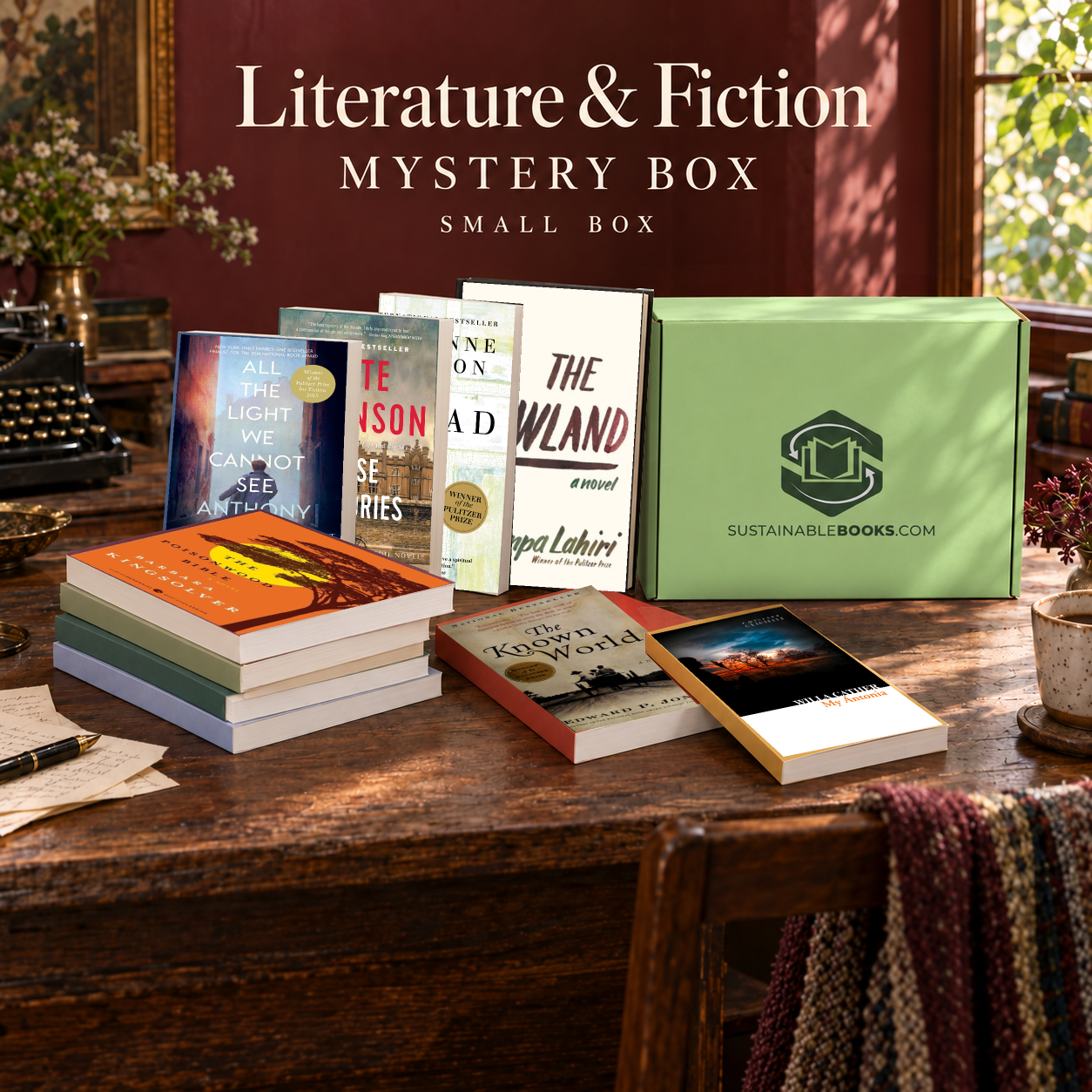
The artwork shows example selections. It can help you explore a theme, but the pictured books are not a contents list.
Choose the size and finish the gift details
On the product page, choose Small, Medium or Large and read the details for that subject and size. Check the displayed approximate book count rather than assuming every theme contains the same number. These are used books; specific titles, editions, formats, condition and quantities vary.
Use the preferences field for the selection request. If the box is a present, check “This is a gift for someone else” and use the separate optional gift-message field for your words to the recipient. Include your name if you want them to know who it is from. The gift checkbox records the request; it is not a promise of extra gift services.
Before paying, check the shopping country, currency, shipping or available local pickup, and the checkout total. If you choose pickup, order online and wait for the ready-for-pickup notice before visiting. For a dated occasion, check the arrangements before counting on a particular arrival day.
Leave room for the surprise
You do not have to know an avid reader’s entire bookshelf to give them a thoughtful starting point. A theme they enjoy and a few useful preferences can be enough to make the selection feel considered while the titles stay a surprise.
Open the animated box and explore the themes, or choose a Custom Mystery Box if you already have a mix in mind.