
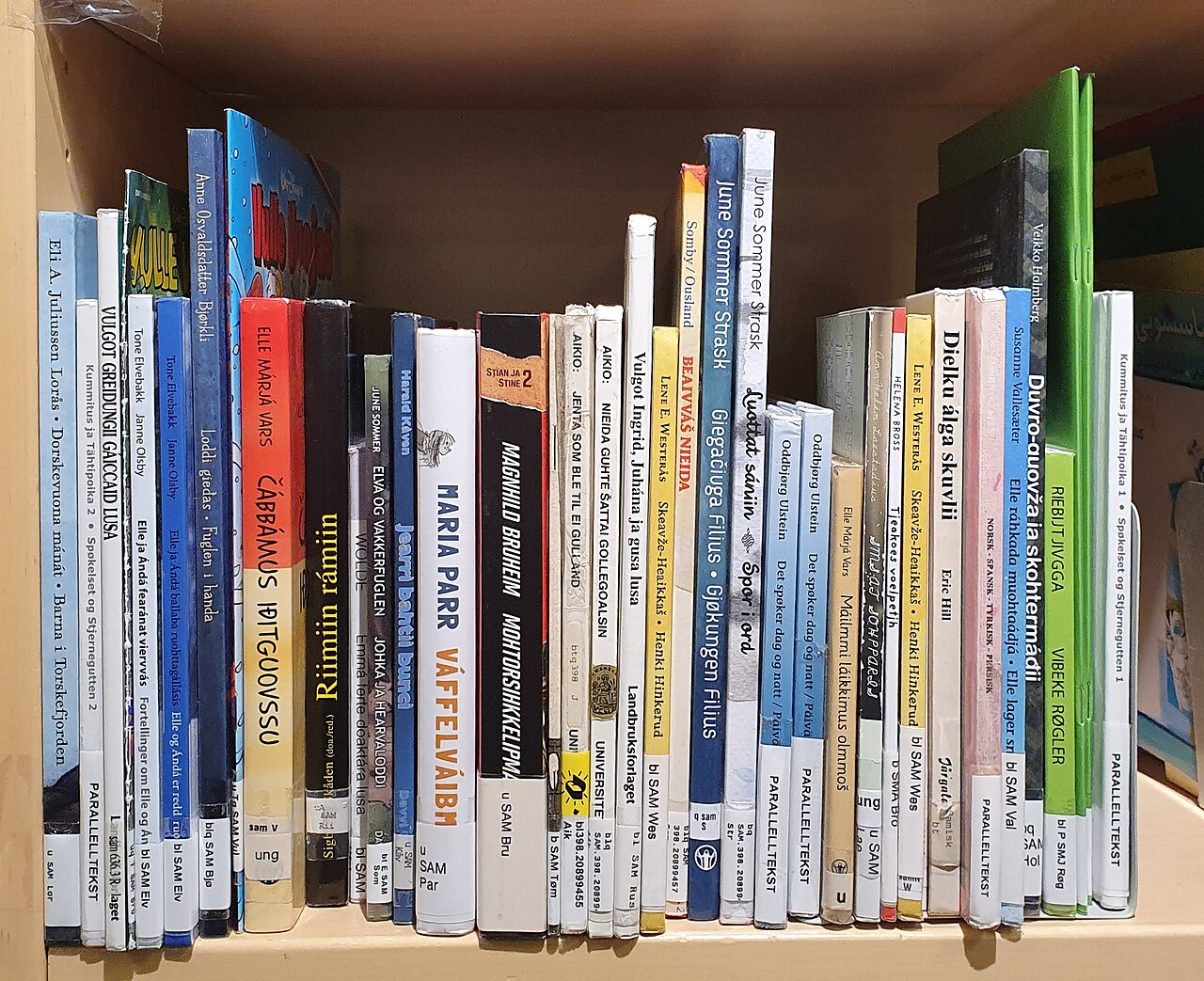
Start with the languages your students want to read in. Then decide whether they need books written in one of those languages, books that put two languages side by side, or both. A box marked “bilingual” can still miss the mark if the language pairs, reading levels or formats are wrong.
Find out what students would take home
Ask students which stories they wish they could borrow. Ask families which language they would like to read together at home. A student may speak a language comfortably but still be learning to read it. Another might want a chapter book in the same language. Give the librarian or classroom teacher a way to record both requests.
Check the shelf before adding to it. Count books students can actually use by language, reading level and format. If a class already has several beginner picture books in one language, a few short novels in that same language could fill a bigger gap. A district can keep one list of needs while recording the school or classroom that asked for each group of books.
Check what the book contains
A dual-language story gives readers the story in two languages in the same book. Check an inside page to see whether both versions are complete and readable. A few translated words at the back serve a different purpose. The Bell Foundation's guide to dual-language books explains why both versions deserve room on the page and why the pictures should help readers follow the story.
A book written in one language can go on the same shelf. It gives a child or family the option to read a story from start to finish in that language. If the plan is to put two separate translations beside each other, check that they really are versions of the same story. When a language uses more than one writing system, specify the script your readers asked for and ask to see a sample page.
Write requests a supplier can answer
Suppose two schools are pooling an order. One asks for Spanish–English picture books families can read together. Its brief could say “both languages in the same book, full story in each, two readable text blocks.” The other asks for short novels in French for independent reading. It could specify “French text throughout, short chapters, a mix of titles.” Both requests count toward the same order, but a spare book from the first group would not fill a gap in the second.
For each group, list the language or pair, any required script, the reading level, the preferred format and how many books you hope to source. Say which details are fixed and which can change. You might accept a different story with the right language pair, for example, while sending any proposed change of script back to your staff reviewer.
Use the school and district ordering guide to combine requests from different rooms and track their budgets and destinations. If sourcing proves difficult, ask which groups can be filled now and which will need more time or a different source. Put the books where students can find and borrow them, then ask which choices they would like more of.
If you have a list for several classrooms or a school library, send your requirements for a bulk-book quote. Sustainable Books can check what may be available. Confirm languages, formats, quantities, condition, pricing and collection or delivery before placing an order.
