
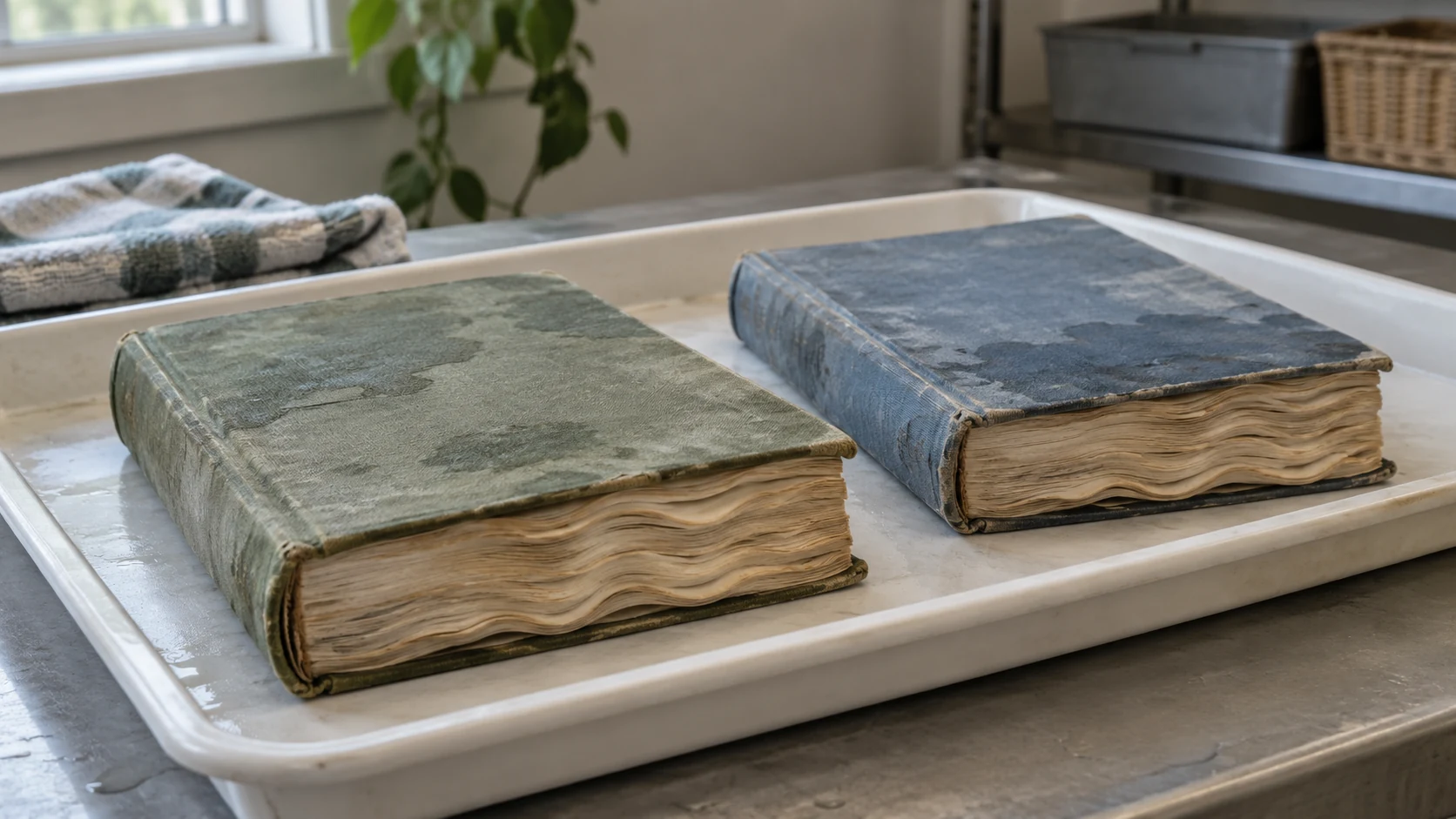
A bent corner and a mouldy book need different decisions. Light wear does not automatically end a book's reading life. Wet pages, visible mould, or flood contamination need more care. Keep suspect material separate from clean donation books, and describe the damage before arranging a handoff.
Start with the reason the books are damaged. A torn dust jacket calls for a condition check. A box recovered after a basement flood calls for advice about the water and the wider cleanup. A book with family photographs tucked inside also needs a personal decision before disposal.
Sort by the problem, not just by age
Old books are not necessarily damaged, and new books are not necessarily fit for reuse. For dry books without suspect growth, check the cover, binding, and several places inside. Avoid opening affected books repeatedly or disturbing suspect growth just to complete a donation inventory.
- Ordinary wear: scuffs, a crease, or a damaged jacket, with dry and complete pages.
- Reading damage: loose sections, missing pages, heavy markings, or a broken binding.
- Moisture damage: damp pages, a wet cover, swelling, or pages stuck together.
- Suspected mould: visible growth or a concerning pattern after damp storage.
This is a practical sorting list, not a way to diagnose mould. Appearance alone cannot establish whether a stained book is safe. If the condition is uncertain, keep it out of the clean batch and ask for advice.
If a book is wet but worth saving
The Library of Congress guidance for wet collections explains that wet paper is fragile. Drying can also leave distortion and require substantial space and attention. A keepsake and a replaceable paperback can therefore justify different recovery decisions.
For a valued item, contact a paper or book conservator promptly. Explain the water source, when the damage occurred, and whether pages are coated or stuck together. Follow the conservator's instructions rather than forcing pages apart or attempting an improvised treatment.
A newly dry cover does not prove that the inside is dry. Keep wet books out of boxes intended for routine donation. After any recovery attempt, describe the previous water damage to the recipient. Passing along that information is part of a careful handoff.
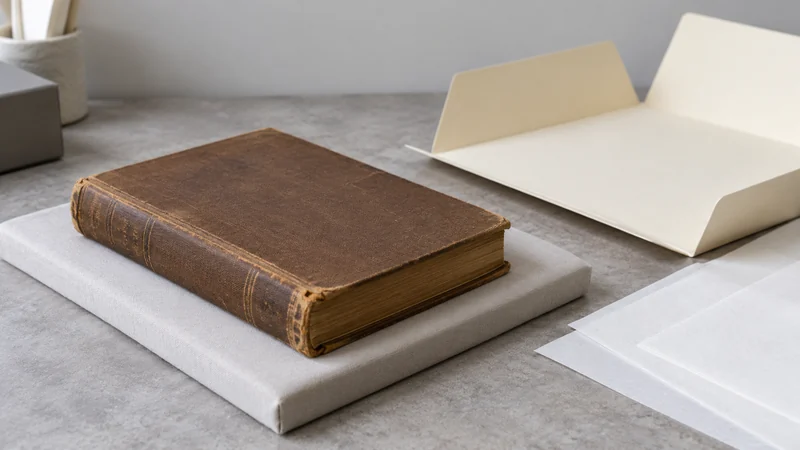
Visible mould needs a separate plan
The Library of Congress describes isolating mould-affected collection items before specialist treatment. Its procedure uses trained staff and controlled equipment. It is not a promise that a household cleaning trick makes a mouldy book suitable for donation.
Avoid brushing suspected mould into the room, shaking books clean, or placing them beside clean stock. Do not use the donation recipient as a cleanup service without discussing the problem. If you need to move affected material, ask a qualified cleanup or conservation professional about suitable containment and handling.
The EPA's home mould guidance explains that mould can be difficult to remove completely from porous materials. It also recommends professional help for sewage or other contaminated-water damage. If you have health concerns, consult a health professional before starting cleanup.
Can damaged books come to Sustainable Books?
Our team assesses books for reuse and responsible recycling. That does not mean every kind of contamination belongs in a normal pickup load. Use the contact page to describe damaged material before you bring or arrange collection of wet or mouldy books. Include the approximate quantity and the kind of damage.
For the clean books in the same clear-out, our book sorting and next-step guide explains the process. Keep those boxes dry and separate. A few problem books need not delay a clearly identified clean batch.
Check disposal instructions for the condition you have
If recovery or donation is unsuitable, ask your local waste service or specialist recycler about damaged books specifically. Wetness, mould, covers, and bindings can affect acceptance. Do not assume that a paper-recycling program accepts contaminated paper or whole books.
Before you close the project, look for the source of dampness. Move the remaining sound books away from leaks and damp storage. Save valuable personal material for a specialist decision, and use a confirmed disposal route for the rest. The goal is a sensible outcome without passing an undisclosed problem to the next person.