
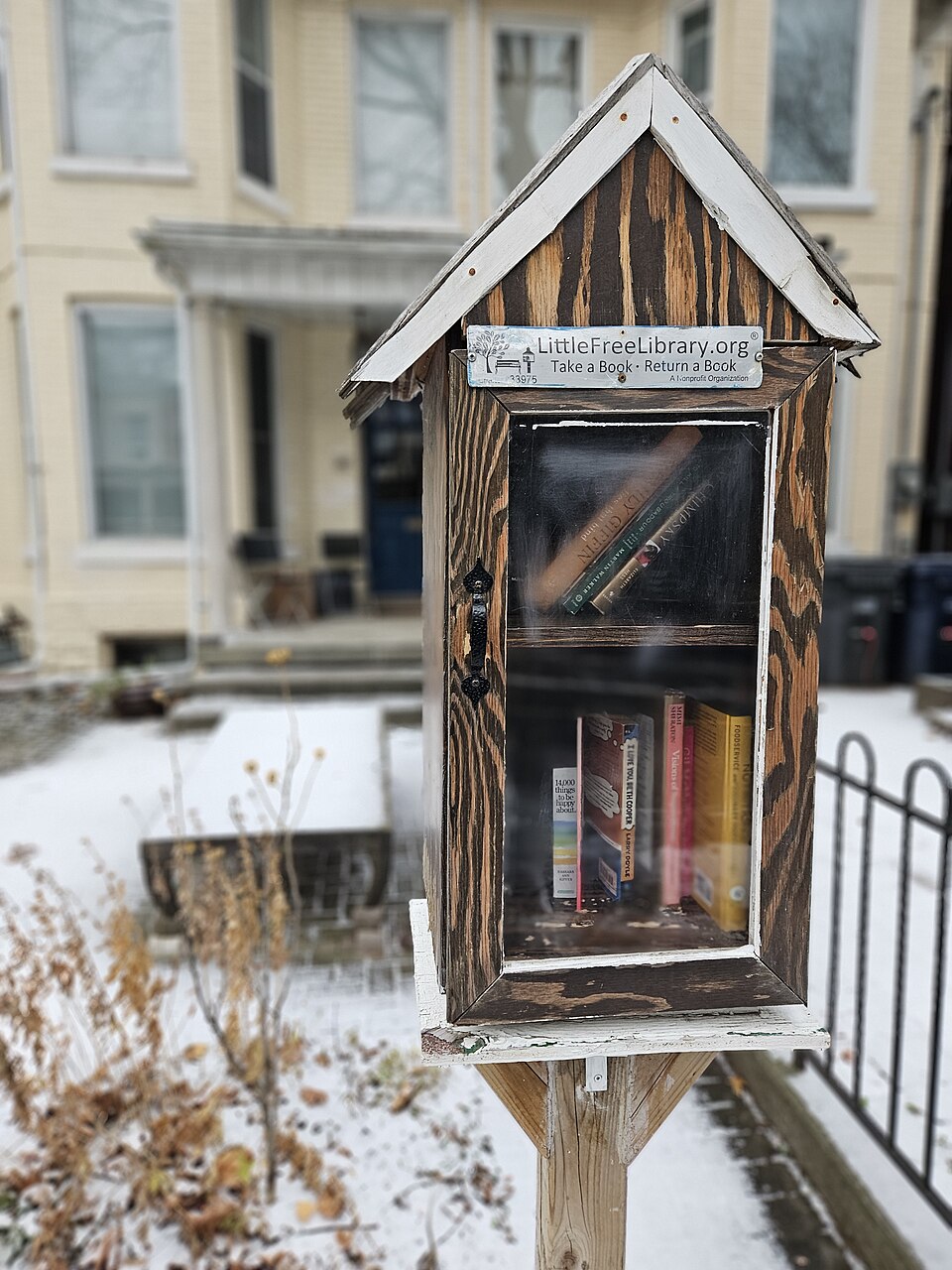
If your group looks after several book-sharing boxes, give each location its own starting mix and keep some books back for the next visit. You can learn more from a half-full box that people use than from a packed one that holds the same titles all month.
A network can be as small as two boxes. At Long Lake Heights in Nanaimo, the community invites residents to add gently used books, keep its two boxes tidy and volunteer to help. The plan below is for the person coordinating that work across several locations.
Measure the shelf and ask the people who check it
Before gathering books, ask each volunteer what fits and what they already see people taking. Note the usable height and depth. Check that the door closes with the largest books in place. Leave room for visitors to browse and put a book back.
Start with a mix that suits each location. A box near a playground might get more picture books and early chapter books. A box outside a community centre might need a broader mix of mysteries, short nonfiction and books in languages its visitors request. Ask the site host or readers what they are missing. A busy location still needs some variety, even when one kind of book moves quickly.
Set aside a reserve before you fill the boxes
Suppose a group gathers 60 books for three boxes. The volunteers place 15 at each site and keep 15 in a dry indoor space. This is an example, so use the space your boxes actually have. If the playground box is short on picture books by the second visit, the coordinator can send more there without clearing out the other two sites.
Label the reserve by the distinctions you use on the route, such as picture books, chapter books, adult fiction and nonfiction. Keep the labels simple enough for someone covering a visit to find the right books. Check used books for loose pages, broken bindings and dampness before they go in. Hold back books that will not fit or are difficult to browse in the box.
Record what would change the next visit
Use one shared note with a row for each site. Record the date, which shelves are low, what you added and any repair or moisture issue the host needs to address. You can add a short observation such as “adult mysteries are still plentiful” or “need more picture books before Saturday.” The note is about the shelves. You do not need to track who takes a book.
If a category is low on several visits, move some of the reserve there or ask for that category specifically. If a title sits for several checks, try moving it to another box that has space and readers for it. Check with the host before moving books between locations someone else looks after. Adjust the visit schedule if one box empties much faster than the others.
Fill the gaps you actually see
Start with books the group has, agreed donations and opportunities available to your sites. The Little Free Library book opportunities page lists resources for stewards, including options with their own eligibility requirements. If you are inviting donations across several sites, our guide to planning a book drive explains how to agree on the book types, storage and handoff.
If your organization wants to buy a varied selection for several locations, send us your bulk book requirements. Share how many sites you are filling, the shelf sizes, the ages and languages you need, and which categories are running low. Include your budget, location and timing. We can check availability or sourcing and discuss a quote and collection or delivery arrangements with you.
