
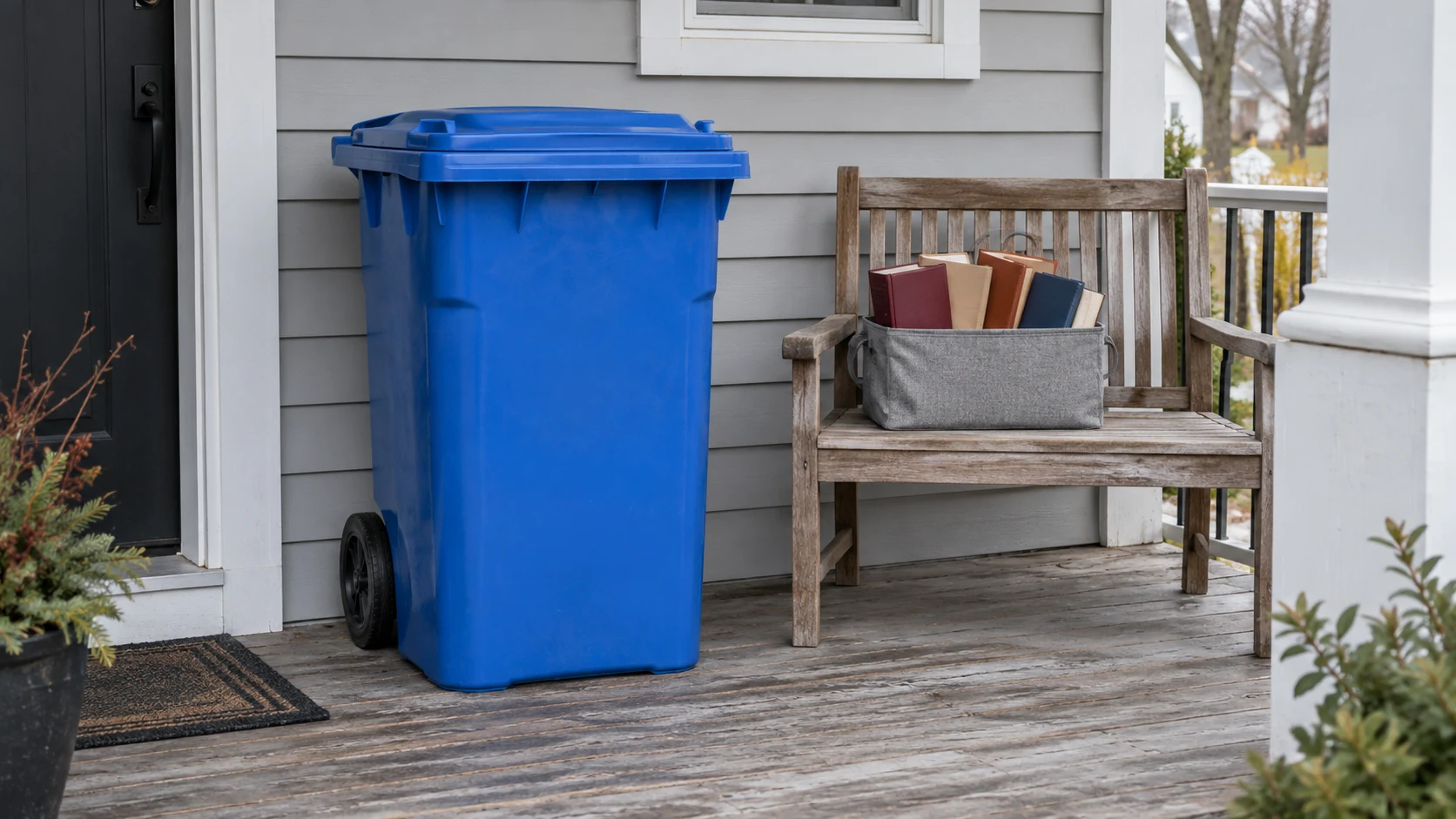
Keep whole books out of Toronto's residential recycling bin. Circular Materials' current Toronto guidance excludes both softcover and hardcover books and novels. A paperback is not accepted just because its pages are paper. The practical choice is to separate your books from household recycling and find a suitable donation or book-recycling route.
This matters when you are emptying a shelf, clearing a basement, or preparing for a move. An old instruction remembered from another city can lead you astray. Check the current Toronto recycling guide from Circular Materials before collection day.
If you live in an apartment building, check your building's collection instructions as well. Keep unwanted books separate while you arrange their next step, rather than leaving a stack in the recycling room for someone else to resolve.
Why putting something in the bin is only the first step
A recycling bin is a collection container, not proof that everything inside becomes a new product. The process still needs sorting, processing, and a suitable manufacturing destination. The U.S. Environmental Protection Agency explains these separate recycling stages. Its process explanation is useful background, rather than a statement of Toronto's collection rules.
A material can be technically recyclable without being accepted by your collection program. Putting an excluded item in the bin does not create a recycling route for it. That is why a familiar recycling symbol, a paper cover, or a hopeful guess cannot replace local instructions.
Rejected material can require disposal instead of recycling. Following the acceptance rules helps the system work as intended. The useful question is where your specific books can go. A blue bin on its own cannot answer that question or guarantee what happens to an excluded book.
Start with the books someone can still use
Before you think about the paper, look at the book. A dry, readable novel can still give another reader a good evening. An intact children's story can find a new family. Your lack of shelf space is different from the book reaching the end of its useful life.
Make a simple first pass:
- Keep personal favorites, borrowed books, and anything you still need.
- Set aside dry books with complete pages and sound enough bindings for another reader.
- Separate wet books, visible mould, and heavily damaged material for advice.
- Check unusual formats or large quantities with the recipient before arranging transport.
You do not need to predict the resale value of every book. You do need to describe the material honestly. A box marked “mixed paperbacks, dry” tells a recipient more than a box marked “recycling.”
A book-specific route through Sustainable Books
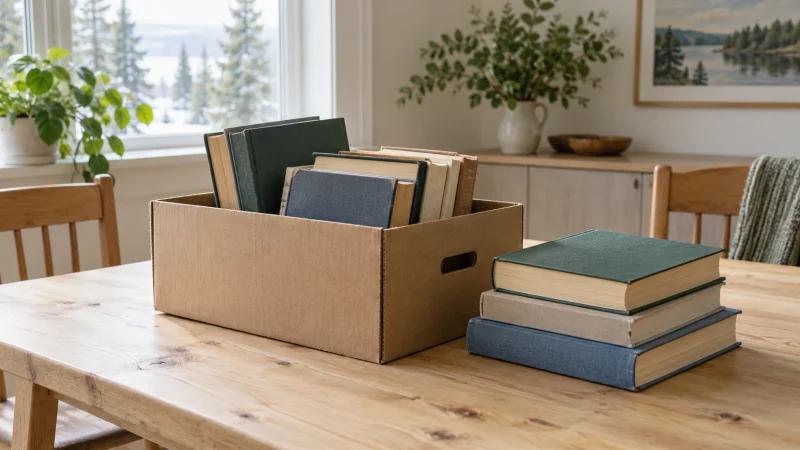
Sustainable Books sorts collected books for their next use. Suitable books can move through resale or donation. Books that are unsuitable for reuse go through our responsible paper-recycling route. These are different outcomes, so donating does not mean that every title goes directly to a particular person or program.
Our guide to the book journey explains the steps. If your books are in Toronto or the GTA, you can request a book pickup. Availability depends on your address and our routes. Wait for a confirmed arrangement before leaving boxes outside.
For warehouse delivery, check the current Concord address and drop-off hours. This is a staffed warehouse option, not an unattended neighborhood donation box. Tell us about damp or mouldy books before bringing them.
What about removing a hardcover?
Do not assume that removing the cover makes a book acceptable in Toronto's bin. The current guide excludes both hardcover and softcover books. If you want to use a specialist paper recycler instead, ask that recycler about whole books, bindings, coatings, condition, and preparation. Follow its answer for that destination.
For a mixed clear-out, keep book boxes separate from flattened packaging and other household materials. Finish one decision at a time: which books can stay in use, which need advice, and which confirmed route can handle the remainder. Checking first saves a wasted trip and gives the books a better chance of reaching the right place.