
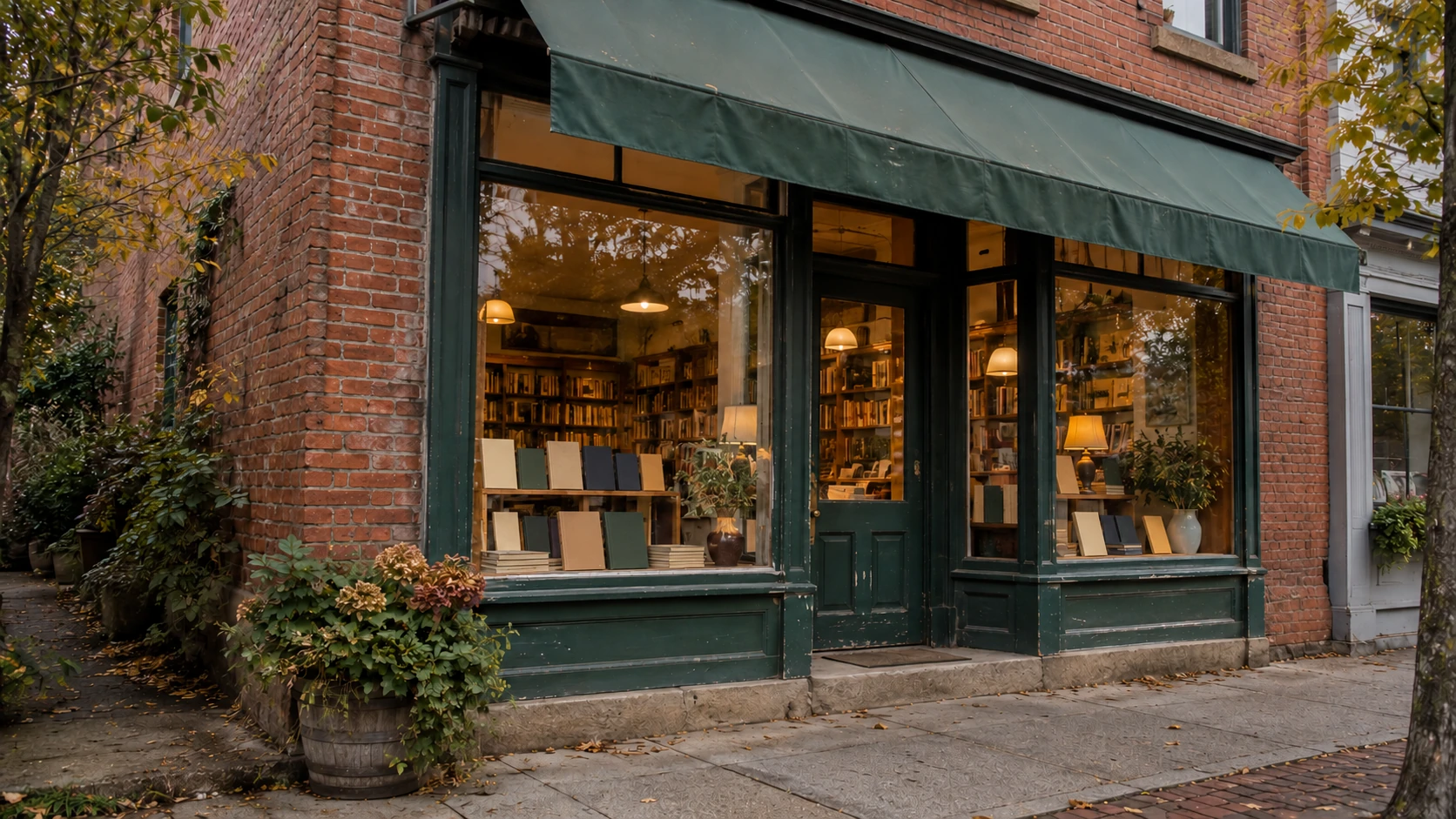
An ethical place to buy books is one whose practices fit your priorities and whose claims you can check. Start with the book you need, then compare sellers on reuse, transparency, service, and their stated commitments. There is no single ranking that settles every reader's choices.
A used copy, a new book from a local shop, and a library loan serve different needs. A practical decision can support an author, keep an existing book in use, or avoid a purchase you do not need. Decide which of those outcomes matters most for this particular book.
Choose your priority before choosing a seller
Write down your main reason for looking beyond your usual retailer. Perhaps you want to buy used, support a nearby bookstore, find an accessible format, or understand a company's environmental statements. Two or three clear priorities make a comparison manageable.
Then separate requirements from preferences. Large print can be essential. A specific edition can be essential for a course. Matching cover colors usually are not. A purchase that fails your reading needs is poor value, however attractive the seller's mission sounds.
- For reuse: look for a readable used copy with an adequate condition description.
- For local service: look for an identifiable store and a real way to ask questions.
- For a new release: check the publisher's edition details and compare the seller's actual availability.
- For occasional reading: check a library or a friend before buying.
Look for a specific explanation of reuse
A used-book purchase gives an existing copy another reader. That is a useful, concrete outcome. It does not establish a precise carbon saving or prove that every other part of the transaction has a lower impact. Shipping, packaging, and what you would otherwise buy also matter.
The U.S. Environmental Protection Agency's waste hierarchy places reduction and reuse ahead of recycling. Apply that idea by buying books you expect to use and passing usable copies along when you finish.
At Sustainable Books, you can browse used books in our shop. Check each listing and the current checkout details rather than assuming a particular title, edition, price, or delivery option is available.

Ask what an environmental claim actually means
Words such as green, responsible, or ethical need an explanation. Does the seller describe a current practice? Does it identify what the claim covers? Can you tell the difference between an action already taken and a future goal?
Canada's Competition Bureau guidance on environmental claims stresses truthfulness, evidence, and clear comparisons. Those are useful questions for shoppers, too. Treat a broad promise as a reason to investigate, rather than as proof.
For example, recycled packaging describes packaging. It does not tell you where a book was printed or how employees are treated. A donation statement needs its own scope. A logo, a leaf graphic, or an attractive photograph cannot answer those questions by itself.
Check who sells the book and who helps afterward
On a marketplace, the website name and the individual seller can be different. Read the seller details, shipping origin, condition notes, and return terms. Establish who handles a missing parcel or a book that does not match its description.
For independent Canadian stores, the Canadian Independent Booksellers Association's bookstore directory is a useful starting point. Visit the chosen store's own website to check its current services. Directory inclusion is not a complete audit of a business.
Compare the full cost. Include shipping, the currency, and any stated charges. Avoid adding unwanted books just to reach a shipping threshold. If pickup fits your existing plans, check its availability before traveling.
Choose a useful next life for your own books
Your buying decision is only one part of a book's life. Keep a small shelf of books you use. Share or donate readable copies that no longer fit your interests, after checking the recipient's rules.
Our guide to what happens to donated books explains Sustainable Books' collection and sorting process. It helps you understand the reuse side of the choice rather than relying on a slogan.
Before your next purchase, answer three questions: Will I use this copy? Do I understand the seller's terms? Is there evidence for the claim that matters to me? A clear answer to those questions is more useful than an unsupported label declaring one retailer the most ethical.