
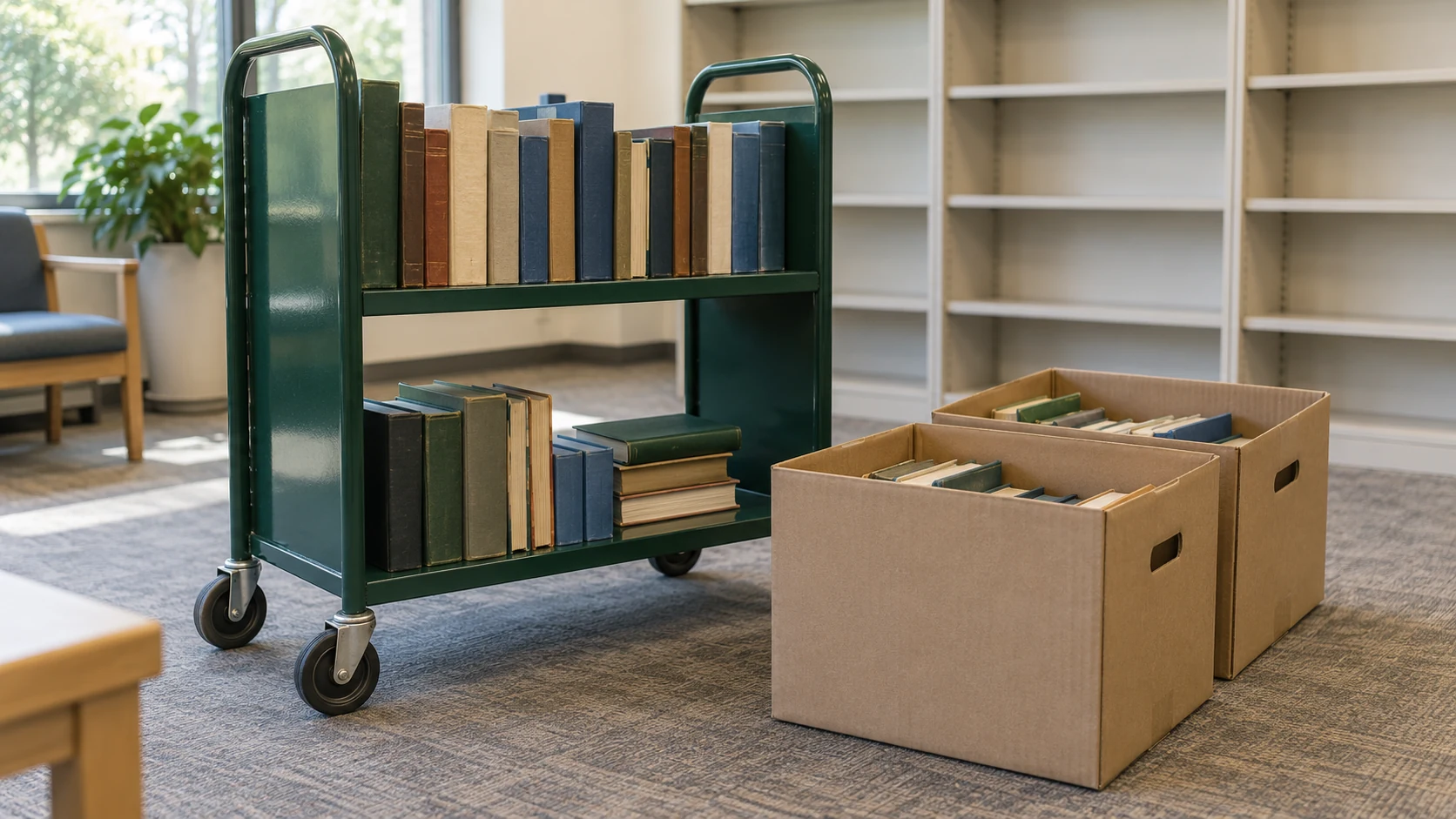
A successful school or library clear-out begins before the first box fills. Confirm which books are authorized to leave, who can approve the handoff, and what the receiving organization can handle. Collection decisions and transport decisions belong in the same plan, but they are not the same job.
The project might be a classroom refresh, a library withdrawal, or books left after a fundraising sale. Each has different ownership and recordkeeping questions. A recipient can arrange collection without deciding what belongs in your institution's collection.
Give the collection decision a clear owner
The American Library Association's guidance on collection maintenance recommends written policies and trained review. It identifies accuracy, relevance, condition, and use among the considerations. Low circulation alone does not settle the value of local history or a distinctive title.
Use your institution's current policy before labeling books for removal. Ask the responsible librarian or administrator to resolve doubtful items. Volunteers can pack an approved batch, but an unmarked shelf must not become a donation pile simply because it is near the sorting table.
Keep separate decisions for institution-owned books, items borrowed from another organization, staff possessions, and books donated for a sale. For a publicly funded institution, check its asset and disposal rules. Do not assume that a rule used by a neighboring school applies to yours.
Make the outgoing batch easy to understand
Walk through a representative sample before calling a collector. Exact title-by-title lists are not always needed for a first conversation. Useful information includes approximate book or box count, main subjects, age groups, formats, condition, and how the books were used.
A short handoff note can cover:
- The institution, collection address, and responsible contact.
- The approved scope, such as withdrawn stock or sale leftovers.
- The approximate number of books or packed boxes.
- Large sets, duplicate textbooks, unusual formats, or other notable material.
- Any dampness, visible mould, or damage requiring separate advice.
- The date by which the books need to leave.
Label the outgoing area clearly. Keep books awaiting approval elsewhere. This prevents a shelf that is still under review from being swept into a confirmed collection.
Plan access before choosing the pickup day
Describe where the books sit and how a vehicle can reach the collection point. Mention stairs, elevators, loading restrictions, school arrival times, and the person available to meet the collector. A request that says “several boxes at the accessible entrance” is easier to plan than an unexpected room full of loose books.
Sustainable Books collects library discards and books left after sales by arrangement. Our pickup areas are in the GTA and nearby Ontario communities, and the Buffalo area of western New York. Availability depends on the location, route, volume, and practical access. A request does not itself reserve a date.
Use our contact page for an organizational collection inquiry. Explain your deadline and any ongoing need. A recurring collection or supplied containers needs its own confirmed arrangement. Do not assume that details from a past event remain current.
Pack for a clear handoff
Use sturdy boxes that can be carried comfortably. Keep the contents dry and avoid overfilling large containers. Number the boxes if that helps match the final count to your project record. Where you have agreed to use the collector's totes, follow the confirmed container arrangement.
Follow your institution's procedure for withdrawn stamps, catalog records, labels, and security tags. Remove loose papers containing student or patron information. Avoid exporting borrowing histories or personal records as part of a book list. If a label needs special handling, ask the responsible staff member before removing it.
Close the project with a useful record
Record who approved removal, the collection date, the destination, and the quantity handed over. Distinguish an approximate count from an exact inventory. For fundraisers, keep the sale's financial records separate from the record of leftover books.
Our guide to what happens to collected books describes assessment, reuse, and responsible recycling. A donation handoff does not guarantee that every withdrawn title will be donated again. Agree on any required reporting before collection, rather than expecting a title-level outcome report afterward.
Leave one named contact responsible until the last box is collected. A clear-out ends well when the shelves, catalog, and handoff record agree, and the receiving team knows exactly what it accepted.